Software Will Commoditize
The cost of software converges with the cost of the energy needed to produce it, and most of the enterprise software industry hasn't noticed yet.
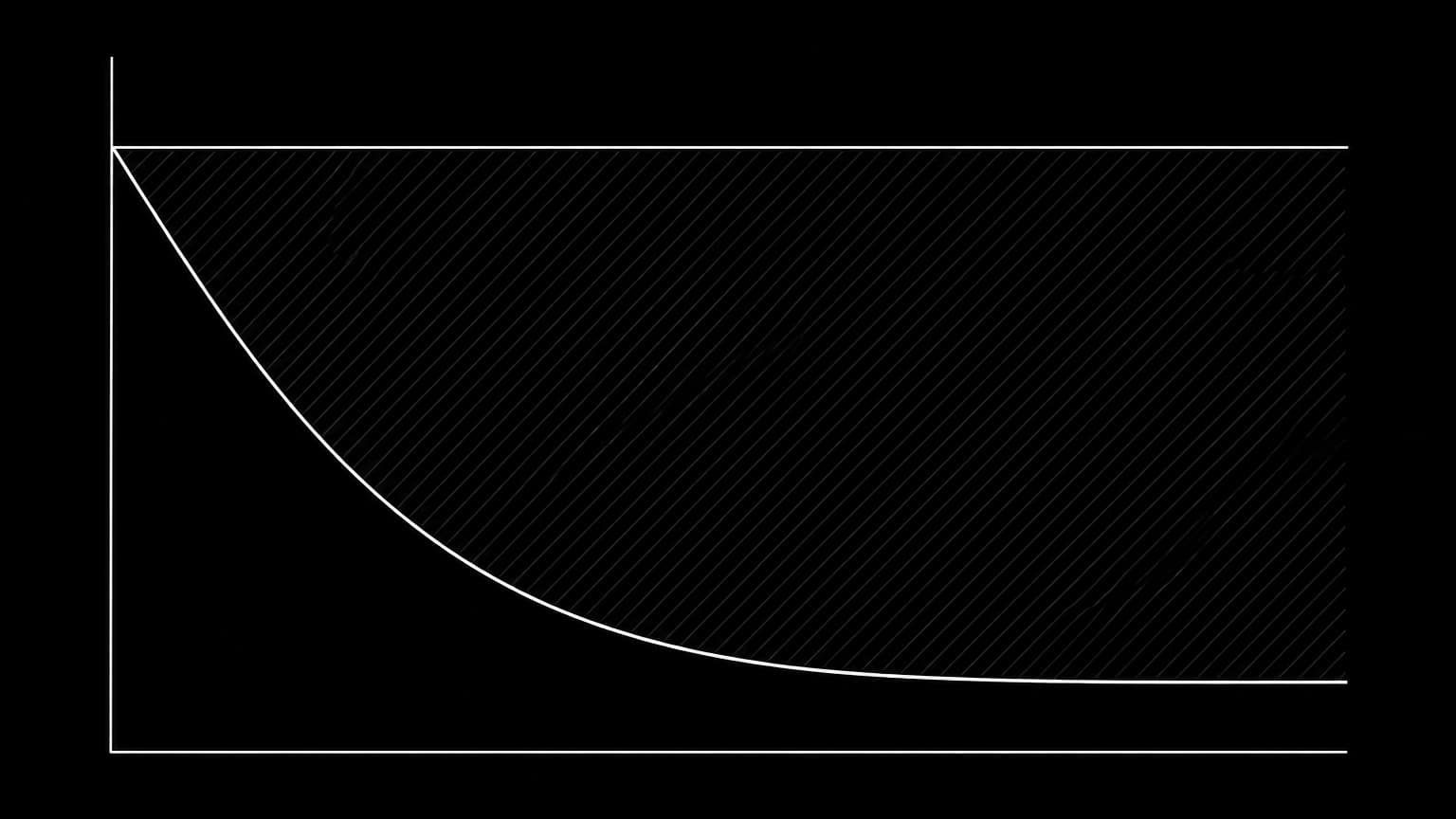
The cost of software will converge with the cost of the energy needed to produce it. Not the cost of licenses, not the cost of seats: energy. Over the next decade, the enterprise software industry will be repriced around that fact, and most of it hasn’t noticed yet.
The prevailing assumption goes something like this: SaaS survived every prior platform shift, so it survives this one. The moats are distribution, customer relationships, switching costs, and trust. AI makes the products better, the vendors add copilots, and the seat-based model rolls on.
I think the prevailing assumption gets the math wrong. What made software valuable was never the code. It was the engineering team the customer didn’t have to hire. Salesforce isn’t selling a CRM, it’s selling the two hundred engineers who build and maintain one so you don’t have to. Every moat the industry believes in is downstream of that one thing, and that one thing is collapsing in price.
The Moats Everyone Cites Are Symptoms, Not Causes
Distribution and customer relationships are the counterarguments I hear most. But notice what both words assume: demand. A customer relationship is a relationship with someone who wants the product. Distribution is the ability to reach people who want the product. If an enterprise can generate the product internally for less, there’s nothing left to relate to or distribute. These aren’t moats. They’re symptoms of the moat that’s disappearing.
The real, remaining moats are temporary and operational: maintenance, infrastructure, someone to blame when something breaks. Those are honest advantages today. But a custom internal tool that took an engineering team weeks and six figures two years ago is now a day or two of work, while SaaS pricing hasn’t moved, still charging per-seat for generic software with customization and integration costs stacked on top. Integration itself, historically the second pillar of SaaS defensibility, is going the same way: API connections, schema parsing, auth flows, and data mapping were multi-quarter projects for senior engineers. They are increasingly prompts and pull requests.
When the thing you sell gets a hundred times cheaper to make and you don’t cut prices, you don’t have a moat. You have a countdown.
It Only Takes One Defector
The interesting question isn’t whether this happens but how, and the answer is the way most competitive equilibria break: one defector per industry.
If enterprise A builds in-house and saves $3 million a year, enterprise B’s fondness for seat-based pricing stops being a preference and becomes a cost disadvantage it has to explain to shareholders. B doesn’t switch because it wants to. B switches because A did. And every model improvement lowers the migration cost that keeps B loyal.
The defectors have started defecting. Klarna’s CEO told investors: “we just shut down Salesforce. Within a few weeks, we will shut down Workday. We are shutting down a lot of our SaaS providers, as we are able to consolidate.” Shopify’s Tobi Lütke mandated that AI be evaluated before any new software license gets approved: if AI can do it, the subscription doesn’t renew. Starbucks began building internal AI software to replace Microsoft applications. Below the headlines, the base is moving too: in a survey of 817 enterprise builders, 35% had already replaced at least one SaaS tool with a custom build, and 78% planned to build more in the year ahead.
Even the incumbents concede the logic. Nadella’s version: business applications are essentially CRUD databases with business logic on top, and the notion that business applications exist could collapse in the agent era. The logic moves to an AI tier, and once it lives there, people start replacing the back ends. When the man who sells Dynamics describes his own category as a database wearing a markup, believe him.
Built Software Compounds. Bought Software Doesn’t.
Here’s the implication the industry hasn’t priced in: the switcher doesn’t just save the subscription.
Bought software is general by necessity. The vendor amortizes one product across ten thousand customers, so it fits none of them exactly, and every customer bends its process around the tool. Built software is vertical by nature. It fits the process, and when the process changes, the software changes with it, at prompt speed. Each iteration makes the internal tool a better fit, which makes the next iteration cheaper to justify. The gap between built and bought doesn’t stay constant. It compounds.
What the Klarna Walkback Actually Teaches
The honest version of this argument has to handle the counter-evidence, because there’s real counter-evidence.
By May 2025 Klarna was rehiring human support agents after service quality dropped, with the CEO admitting the company had overweighted cost-cutting. But look at what failed: the customer service automation, not the software replacement. Different bets. The lesson is that the transition is uglier than the press releases, not that the direction is wrong.
The steadier data point is this: enterprise build-in-house preference sits at 56%, virtually unchanged year over year, and vendors keep structural advantages in security governance and integrations that internal teams can’t easily replicate. True, and it tells you exactly where the frontier is. Software survives where it’s genuinely hard to replicate. It dies where it’s a database with workflow logic on top. Most of SaaS is the second thing.
Markets Have Started Doing the Math
Public investors repriced this before the industry admitted it. Over $2 trillion in software market cap evaporated starting in late January 2026, in what JP Morgan called the largest non-recessionary drawdown in three decades. The mechanism matters: investors weren’t repricing next quarter, they were cutting their estimate of how much per-seat revenue exists in 2030 and beyond. Public SaaS went from 15x-30x forward revenue in 2021 to 5x-8x today.
That’s not a correction. That’s a category being marked down to what it’s becoming.
What This Means for the Next Decade
Does the SaaS model vanish? Yes, but slowly, and from the commodity layer inward. Workflow tools, internal dashboards, and CRUD-with-a-UI go first. Systems of record with real regulatory weight and hard integration surfaces go last, and a few may never go at all. Ten years from now, we won’t remember which vendor had the best seat-based CRM in 2026. We’ll remember which enterprises figured out that the product they’d been renting was an engineering team, and that the price of engineering had converged with the price of energy.